
Your Calendar as a Design Tool
There is a system quietly influencing everything behind the scenes in your landscape practice, especially during the busiest months of the year:
Your calendar.
Because even with strong inquiries and a clear process, many landscape designers still find themselves exhausted by mid-season. Not always because they have too much work, but because their time has become fragmented, reactive, and constantly interrupted. (I have been there!!)
At some point during busy season, many designers begin operating from one thought:
“I just need to get through this week.” (I have been here, too!)
The calendar fills. The consultations stack up. Install questions start rolling in. Design work gets pushed into evenings and weekends.
And slowly, something shifts.
The calendar stops functioning as a tool that supports the business and starts draining us. This is where many talented designers unintentionally slip into survival mode.
And that is why your calendar deserves far more attention than most people give it.

🌳 Your Calendar Is a Design Tool
Most designers think of scheduling simply as logistics.
But your calendar is actually shaping:
When every hour is packed, there is no room for thoughtful decision-making or designing. You end up reacting instead of leading or feeling so stretched you have trouble accessing your creativity.
Remember, a well-designed landscape needs structure and rhythm (and some breathing room.) So does a well-designed workday. Here is an example of a time blocked calendar for a designer: |
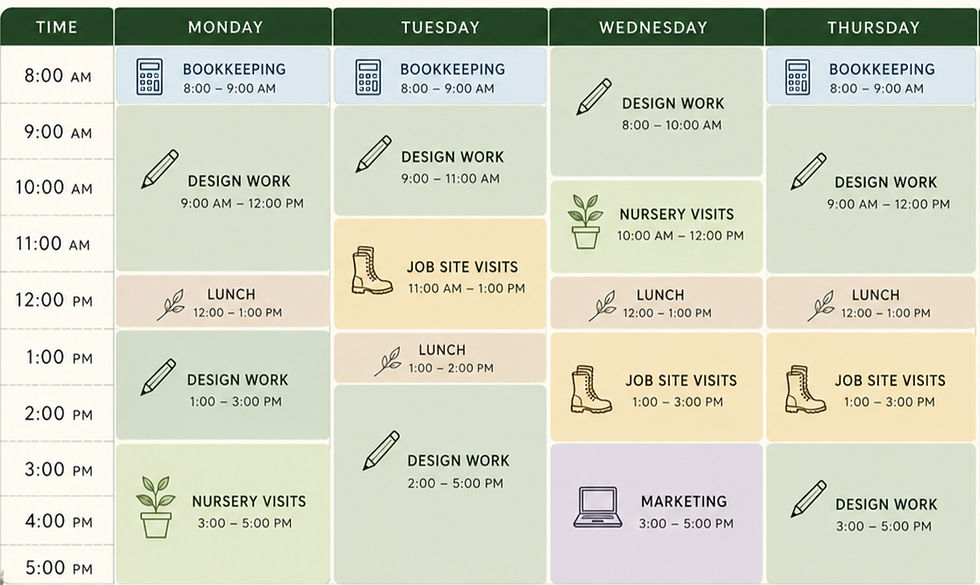
Here are three things to consider about how to structure your time:
1. Are you scheduling design time or only appointments?
Many designers fill their calendars with consultations, meetings, site visits, and errands, leaving the actual creative work squeezed into leftover hours. But design work requires uninterrupted thinking time.
If you do not intentionally protect your design time, the busy season will consume it.
2. Are you constantly switching between tasks?
Jumping from emails, to client calls, to site visits, to drawing revisions all day long is mentally exhausting.
Grouping similar tasks together creates more focus and less fatigue. Even small scheduling changes to align like tasks can improve your productivity.
3. Is your calendar reflecting your priorities or everyone else’s urgency?
This is an important distinction.
Just because something feels urgent to a client does not mean it should immediately reshape your entire day. Strong businesses are not built by constantly reacting. They are built by designing systems that support consistency and sustainability.
A full calendar may look successful from the outside. But a sustainable business requires more than being busy. It requires space to think clearly, communicate well, and create thoughtfully.
🗓️ As you move deeper into the season, ask yourself:
Am I intentionally designing my schedule? Or am I simply surviving it? |
Want help thinking about your workday or some industry specific support for the business side of your landscape design business? Check out my comprehensive business system built specifically for landscape designers: Foundations of a Landscape Design Business ! |
Comments